MAY 24, 2022
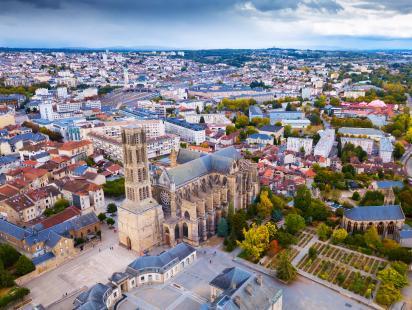
According to the World Bank, cities account for only 55% of Earth’s population, and generate more than 80% of the global GDP. They also often have a high economic growth. An Oxford study estimated Paris’ growth rate between 2019 and 2035 to be approximately 1.7%. But how can we explain this urban economic growth? The economists Christian Ghiglino, Kazuo Nishimura, and Alain Venditti aim to respond to this question by using a model that combines two major economic theories.

Read the article on
https://www.dialogueseconomiques.fr/article/dagricoles-industrielles-la-croissance-des-villes

Latest publications

Focus | Elections Beyond Politics
The outcome of an election does not depend only on the programs and the candidates. The voting system and the strategies of those involved also play a role. Three insights from economics to help better understand some of these mechanisms.
‘Seeking to lower the price of carbon would mean revising Europe’s climate ambitions downwards.’
A collective op-ed published by Le Monde, co-signed by Fanny Henriet (CNRS/AMSE).
Municipalities: considerable challenges to overcome
Alain Trannoy (EHESS/AMSE) in the “Cercle des économistes” column published in Les Echos.