SEPTEMBER 28, 2021
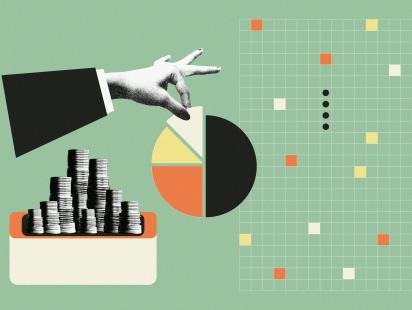
Should we wish for the best or focus on damage control? From deciding who will sit on the U.S. Supreme Court, to choosing a cake for guests, or distributing a budget, the question is always there. Anna Bogomolnaia, Ron Holzman, and Hervé Moulin look at the mechanisms of decision-making and come up with ways to increase the guarantee that the worst will not happen.

Read the article on
https://www.dialogueseconomiques.fr/en/article/collective-decision-preventing-worst-happening

Latest publications

When economic precarity compounds the harms of homophobia
In many low- and middle-income countries, being LGBTQIA+ entails a double burden: discrimination compounded by economic precarity. Economists Bruno Ventelou and Erik Lamontagne reveal how this combination can undermine mental health, by cross-referencing global data on wellbeing, economic conditions, and the homophobic climate.
In Spain, economic policy has been conducive and has benefited from favourable circumstances
Only in French - An op-ed by Cecilia García Peñalosa (CNRS, EHESS, AMSE) and Alain Trannoy (EHESS, AMSE) published in the newspaper Le Monde.
The True Price of CO₂
In 2024, a grim record was set: it was the hottest year ever recorded on Earth. The signs of climate upheaval are now visible to all, as global warming manifests itself in a rapid rise in extreme weather events. In theory, the solution is straightforward: we must stop burning fossil fuels. In practice, phasing out energy sources so firmly entrenched in contemporary societies is an immense challenge. To reduce CO₂ emissions, economists — trained in cost–benefit analysis — can help policymakers design strategies that are both effective and socially acceptable.