NOVEMBER 9, 2021
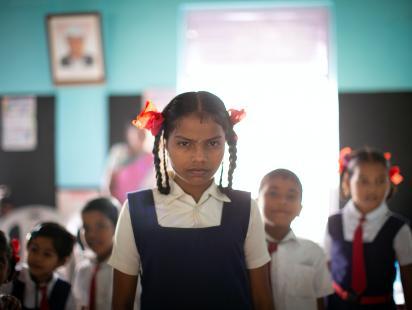
For the most impoverished, the various obstacles and pitfalls along the path to school do not always make it a walk in the park. To fight against poverty, many microcredit programs have been set up. One of these, the “Self Help Group” in the state of Jharkhand, India, has been studied by economists Jean-Marie Baland, Timothée Demont, and Rohini Somanathan. After six years of operation, the program has increased school enrollment by 40%. However, it remains ineffective in reducing child labor. These results can further help us understand how microcredit works.
Reference
Baland, Jean-Marie, Timothée Demont, and Rohini Somanathan. 2020. “Child Labor and Schooling Decisions among Self-Help Group Members in Rural India.” Economic Development and Cultural Change 69 (1): 73–105.
Read the article on
https://www.dialogueseconomiques.fr/en/article/microcredit-india-forging-new-path-school

Latest publications

When France’s Légion d’honneur awards move stock prices: A market signal of political access
Two articles by Stéphane Benveniste (University of Paris 1, CES, AMSE) and Marc Sangnier (Aix-Marseille University, AMSE) published in VoxEU (CEPR) and The Conversation.
The 'Dialogues économiques' magazine No. 6 is online
This issue compiles the 'Dialogues économiques' articles published in 2025.
"Us" Against "Them": Ethnicity in Conflict
Whilst war fractures societies, it can bring about reinforced bonds within the communities it targets. By analysing ethnic conflicts across 36 African countries between 2002 and 2015, economist Matteo Sestito offers an original perspective on the mechanisms that forge identities and strengthen cohesion within the communities it strikes.