Ricardo Guzman
Doctorant
,
Aix-Marseille Université
, Faculté d'économie et de gestion (FEG)
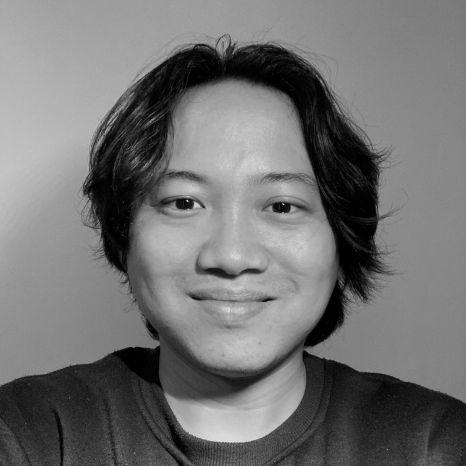
- Statut
- Doctorant
- Domaine(s) de recherche
- Économie du développement, Économie internationale et géographique
- Doctorat
-
Trade, distortions and structural transformationDepuis 2022, sous la direction de Lorenzo Rotunno, Federico Trionfetti
- Contact
- ricardo.guzman[at]univ-amu.fr
- Adresse
Maison de l'économie et de la gestion d'Aix
424 chemin du viaduc, CS80429
13097 Aix-en-Provence Cedex 2
Maria Joy V. Abrenica, Ricardo Rafael S. Guzman, Anthony Sabarillo, Asian Economic Papers, Vol. 23, No. 3, pp. 34-52, 10/2024
Résumé
In the competition for hegemony of major powers, it seems logical for a small or middle power state to be ambiguous on its preference. Aligning with one protagonist for protection and preferential treatment can only be at the expense of antagonizing the other. Conventional wisdom holds that hedging is practical as it allows a country to leverage on its amicable relations with both powers. The ASEAN states are caught in the middle of the U.S.–China economic rivalry as well as directly engaged in maritime disputes with China. This paper evaluates strategic ambiguity versus alignment against the backdrop of trade decoupling of rival superpowers. Using a multi-sector, multi-country Ricardian trade model, our simulation results reveal that it is in the interest of some economies to align with one of two camps, contrary to conventional wisdom. The diverse welfare effects of decoupling on member states prevent the attainment of a unified ASEAN position and undermine ASEAN centrality in curbing the risk of a second cold war.