Decisions in Periods of Uncertainty, Fear, and Catastrophe

Dialogues économiques
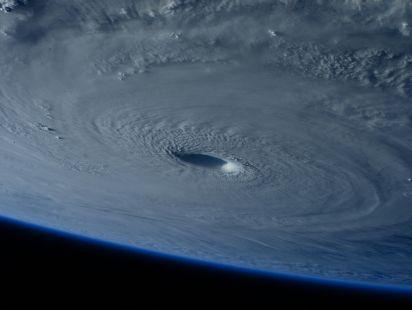
One of the things which led to Covid-19 becoming a catastrophic situation has revealed to be the choices that were made before the pandemic. Regardless of whether these choices were good or not, they were nevertheless made. This therefore leads to the question of how catastrophes influence decision-making in uncertain situations. Theories are able to clearly explain our choices when we have all the elements in hand. However, once exceptional situations occur, such as catastrophes that have disastrous yet very unlikely consequences, these theories reveal to be less pertinent.
April 29th 2020

Previously issued

  • Press

In Spain, economic policy has been conducive and has benefited from favourable circumstances

Only in French - An op-ed by Cecilia García Peñalosa (CNRS, EHESS, AMSE) and Alain Trannoy (EHESS, AMSE) published in the newspaper Le Monde.
December 22nd 2025
  • Dialogues économiques

The True Price of CO₂

In 2024, a grim record was set: it was the hottest year ever recorded on Earth. The signs of climate upheaval are now visible to all, as global warming manifests itself in a rapid rise in extreme weather events. In theory, the solution is straightforward: we must stop burning fossil fuels. In practice, phasing out energy sources so firmly entrenched in contemporary societies is an immense challenge. To reduce CO₂ emissions, economists — trained in cost–benefit analysis — can help policymakers design strategies that are both effective and socially acceptable.
December 10th 2025
  • Press

Healers are easy targets

Only in French- An op-ed by Daniel Ventosa-Santaulària (CIDE), visiting professor at Aix-Marseille School of Economics, published in La Provence.
December 04th 2025