Phone Scams: Can We Outsmart the Fraudsters?

Dialogues économiques
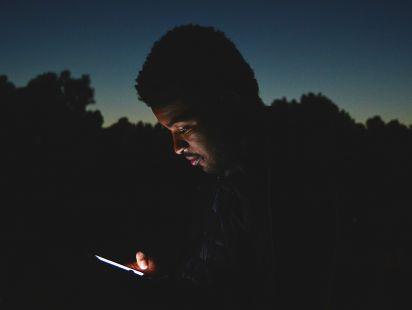
Have you ever hesitated when confronted with a text message reminding you to pay an unpaid bill? Or received a message claiming to be from your bank, urging you to update your personal information? Looking at the case of Kenya, economists Elif Kubilay, Eva Raiber, Lisa Spantig, Jana Cahlíková, and Lucy Kaaria examined the ability of individuals to detect fraud attempts.
February 04th 2025
Reference
Kubilay, E., Raiber, E., Spantig, L., Cahlíková, J., Kaaria, L. 2023. « Can you spot a scam? Measuring and improving scam identification ability. Journal of Development Economics », 165, 103147. Int.
Previously issued

  • Dialogues économiques

When economic precarity compounds the harms of homophobia

In many low- and middle-income countries, being LGBTQIA+ entails a double burden: discrimination compounded by economic precarity. Economists Bruno Ventelou and Erik Lamontagne reveal how this combination can undermine mental health, by cross-referencing global data on wellbeing, economic conditions, and the homophobic climate.
January 09th 2026
  • Press

In Spain, economic policy has been conducive and has benefited from favourable circumstances

Only in French - An op-ed by Cecilia García Peñalosa (CNRS, EHESS, AMSE) and Alain Trannoy (EHESS, AMSE) published in the newspaper Le Monde.
December 22nd 2025
  • Dialogues économiques

The True Price of CO₂

In 2024, a grim record was set: it was the hottest year ever recorded on Earth. The signs of climate upheaval are now visible to all, as global warming manifests itself in a rapid rise in extreme weather events. In theory, the solution is straightforward: we must stop burning fossil fuels. In practice, phasing out energy sources so firmly entrenched in contemporary societies is an immense challenge. To reduce CO₂ emissions, economists — trained in cost–benefit analysis — can help policymakers design strategies that are both effective and socially acceptable.
December 10th 2025