At the crossroads of science and society, the Public Outreach unit of the Aix-Marseille School of Economics is committed to sharing economic science with non-specialist audiences, with the aim of shedding light on societal issues and contributing to collective thinking.

Une troisième voie pour améliorer le système de santé français ?

Only in French | In The Conversation, Thomas Barnay (Harvard Medical School / UPEC), Bruno Ventelou (AMU / CNRS / AMSE), Samson Anne Laure (University of Lille) propose ways to improve the French health system.
DECEMBER 16, 2021
DECEMBER 16, 2021

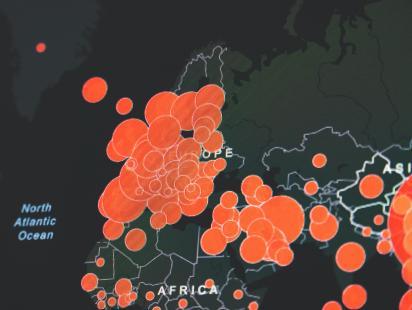
Measuring the Efficiency of anti-Covid Policies in Europe

Only in English | A study by Ewen Gallic (AMU / CNRS / AMSE), Michel Lubrano (AMU / CNRS / AMSE) and Pierre Michel (AMU / CNRS / AMSE) published in the Journal of Public Economic Theory mesured the efficiency of anti-Covid Policies in Europe.
DECEMBER 16, 2021
DECEMBER 16, 2021

Protecting and Taking Advantage of Nature: A Paradox?

In the current Anthropocene epoch, human economic activities seem increasingly incompatible with nature preservation. In fact, many habitats and species have already paid the price… Researchers Noël Bonneuil and Raouf Boucekkine strive to address this apparent paradox by proposing an approach that combines population genetics and econometrics.
DECEMBER 7, 2021
DECEMBER 7, 2021

The Infertility Boom: What Are the Costs to Society?

It is becoming increasingly more difficult to have a baby. In France, one in every eight couples seeks help for a fertility problem. Solutions such as medically assisted reproduction (MAR) do exist, but these treatments can be costly for both individuals and society. Faced with this phenomenon, economists Johanna Etner, Natacha Raffin, and Thomas Seegmuller have sought the best system to reduce the inequalities generated by infertility, which affects individuals in an increasingly random manner.
NOVEMBER 23, 2021
NOVEMBER 23, 2021

Microcredit in India: Forging A New Path to School?

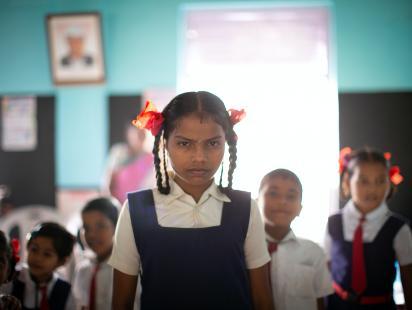
For the most impoverished, the various obstacles and pitfalls along the path to school do not always make it a walk in the park. To fight against poverty, many microcredit programs have been set up. One of these, the “Self Help Group” in the state of Jharkhand, India, has been studied by economists Jean-Marie Baland, Timothée Demont, and Rohini Somanathan. After six years of operation, the program has increased school enrollment by 40%. However, it remains ineffective in reducing child labor. These results can further help us understand how microcredit works.

NOVEMBER 9, 2021
NOVEMBER 9, 2021

Compétences socio-émotionnelles : faut-il avoir une famille nombreuse ?

Qualifications are not everything in the job market. Knowing how to be patient, work in a team, and manage your emotions are all highly valued skills. These so-called non-cognitive or social-emotional skills are developed during a key period in our life: childhood. Economists Simon Briole, Hélène Le Forner, and Anthony Lepinteur reveal in a recent study how sibling size influences the development of social-emotional skills and has the dependent variable of gender.
OCTOBER 26, 2021
OCTOBER 26, 2021

Voting When Conflicted

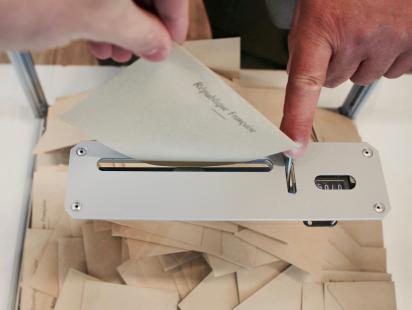
When you step into a voting booth, you are faced with a choice: who do you vote for? What happens to people who share the ideas of several parties at once? How can these people influence elections? These are the questions that Sacha Bourgeois-Gironde and João V. Ferreira answer in an article that examines how individuals divided between several ideologies can impact elections.
OCTOBER 12, 2021
OCTOBER 12, 2021
Joint Seminars public events sciences echos Only in french

La causalité

Russell Davidson
MARCH 22, 2022
MARCH 22, 2022
MARCH 1, 2022
MARCH 1, 2022