At the crossroads of science and society, the Public Outreach unit of the Aix-Marseille School of Economics is committed to sharing economic science with non-specialist audiences, with the aim of shedding light on societal issues and contributing to collective thinking.
JANUARY 18, 2022
JANUARY 18, 2022
NOVEMBER 16, 2021
NOVEMBER 16, 2021

Collective Decision: Preventing the Worst from Happening

Should we wish for the best or focus on damage control? From deciding who will sit on the U.S. Supreme Court, to choosing a cake for guests, or distributing a budget, the question is always there. Anna Bogomolnaia, Ron Holzman, and Hervé Moulin look at the mechanisms of decision-making and come up with ways to increase the guarantee that the worst will not happen.
SEPTEMBER 28, 2021
SEPTEMBER 28, 2021

Health economics - Interview with Bruno Ventelou

Bruno Ventelou (AMSE/CNRS), a health economist, talks about his research.
SEPTEMBER 16, 2021
SEPTEMBER 16, 2021

Prevention is better than ... getting old?

In 2019, public health expenditure in the European Union amounted to 983 billion euros - 7% of GDP on average. According to a study conducted by researchers Yevgeniy Goryakin, Sophie Thiébaut, Sébastien Cortaredona, Aliénor Lerouge, Michele Cecchini, Andrea Feigl, and Bruno Ventelou, health spending will continue to increase steadily, reaching an estimated figure of between 1223 and 1278 billion euros by 2050.
AUGUST 31, 2021
AUGUST 31, 2021

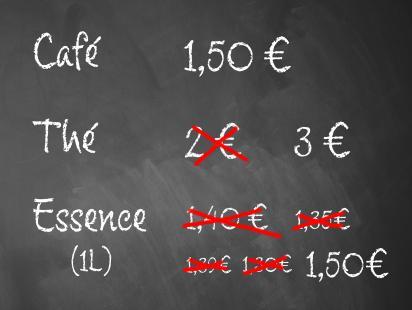
Why do most prices rarely change?

Fuel prices are almost constantly changing, whilst prices paid for electrical appliances may remain stable for several months. For most products, prices tend to remain the same over weeks or even months. There is a simple explanation for this: it would be too expensive for companies to perpetually analyse market price changes. This is the conclusion reached by economists Mark N. Harris, Hervé Le Bihan and Patrick Sevestre after analysing the evolution of prices of several hundred industrial product pricess.
SEPTEMBER 14, 2021
SEPTEMBER 14, 2021

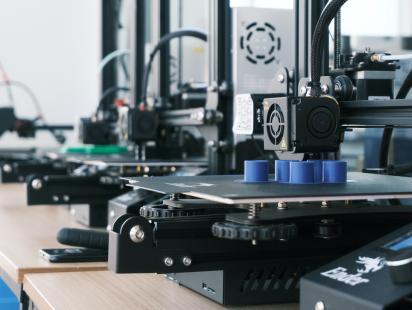
L'impression 3D (et l’économie) peuvent renforcer l’efficacité de la lutte contre les pandémies

Only in French | A team of researchers, including Gilbert Cette (AMSE/AMU/Banque de France), questions, the relevance of 3D printers as a means of production in times of pandemic
AUGUST 25, 2021
AUGUST 25, 2021

Health effects from heat waves in France: an economic evaluation

A study by Lucie Adélaïde (Santé publique France), Olivier Chanel (AMU/CNRS/AMSE), Mathilde Pascal (Santé publique France) published in the European Journal of Health Economics and Bulletin épidémiologique hebdomadaire assesses the economic impact associated with mortality, morbidity, and loss of well-being during heat waves in France
JULY 26, 2021
JULY 26, 2021

Summer with Dialogues économiques

Dialogues économiques is taking its summer break and looks forward to seeing you on September 1st ! To keep you waiting until then, the online magazine offers you a selection of articles to (re)read...
JULY 19, 2021
JULY 19, 2021

Making doubt profitable

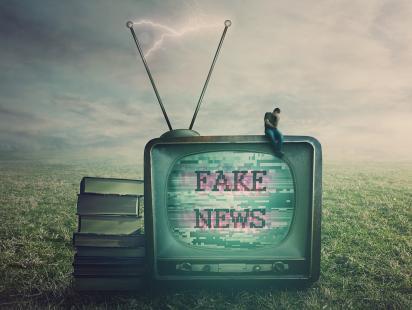
In May 2021, a French youtuber revealed on social networks that he had been approached by a communication agency to discredit the Pfizer-BioNTech vaccine. Following his statement, other European influencers report receiving an identical proposal. The deal was that they would put forward a pre-written false argument in exchange for a fee. The aim? Likely to promote another vaccine over the German one. This attempt to cast doubt is reminiscent of how industrialists attempt to manipulate public opinion. Economists Yann Bramoullé and Caroline Orset modelled the cost of firms’ manipulation of scientific facts.
JUNE 29, 2021
JUNE 29, 2021