At the crossroads of science and society, the Public Outreach unit of the Aix-Marseille School of Economics is committed to sharing economic science with non-specialist audiences, with the aim of shedding light on societal issues and contributing to collective thinking.

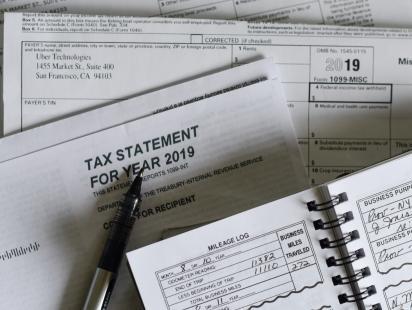
Qui fraude le fisc ? / Who is evading taxes?

Only in French | Nicolas Jacquemet (Université Paris 1 / École d’économie de Paris), Stéphane Luchini (CNRS/AMSE) and Antoine Malézieux (Burgundy School of Business) explain, in an article accessible to all on the website "La vie des idées", how behavioural economics sheds more light on the determinants of tax evasion.
JUNE 21, 2021
JUNE 21, 2021

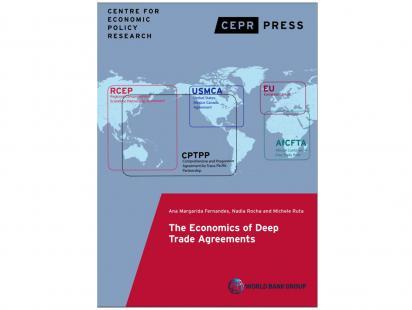
The Economics of Deep Trade Agreements

Only in english | In this eBook, Center for Economic and Policy Research (CEPR) and World Bank bring together leading experts in international trade from academia and policy institutions to provide new analysis on the determinants of deep trade agreements. Freely available from 23 June 2021.
JUNE 23, 2021
JUNE 23, 2021

Le système de santé : enjeux et défis

Only in French | This collective work, proposed for the 30th anniversary of the Collège des Economistes de la Santé and coordinated by Thomas Barnay (Université Paris-Est Créteil), Anne-Laure Samson (Université de Lille/LEM), and Bruno Ventelou (AMU/CNRS/AMSE), analyses the main challenges facing the health system. Available online on 24 June and in bookshops on 12 July 2021.
JUNE 22, 2021
JUNE 22, 2021

Talent, Taxes & Equal Opportunity

What is talent? According to the economist Alain Trannoy, it is the sum of an initial skill and the efforts made to maintain it. This definition is part of a larger philosophical sphere focused on equal opportunity, which applies to a redistributive tax model that aims to reduce income inequality.
JUNE 15, 2021
JUNE 15, 2021

COVID-19 vaccine hesitancy in a representative working-age population in France: a survey experiment based on vaccine characteristics

Around one in three working-age adults (29%) surveyed in France in July 2020 would refuse any COVID-19 vaccine fond a team of researcher including Stéphane Luchini (CNRS, AMSE). This study was published in The Lancet Public Health the 5th February 2021.
FEBRUARY 4, 2021
FEBRUARY 4, 2021

A la reconquête du travail durable - L'économie sociale et solidaire en pionnière

Only in French | In this book, Arnaud Lacan (KEDGE Business School/AMSE) presents the social and solidarity economy as a viable and sustainable alternative to traditional work systems based on surveillance and verticality.
JUNE 7, 2021
JUNE 7, 2021

Un outil pour suivre la dynamique virale en temps réel et guider la décision publique

A team of researchers from Aix-Marseille School of Economics and the Institut de Neurosciences de la Timone is proposing an indicator that measures the dynamics of the Covid-19 pandemic and an algorithm for the spatial distribution of the tests. Their research was published in the scientific journal PLOS ONE.
JUNE 2, 2021
JUNE 2, 2021

Crises épidémiques et mondialisation, des liaisons dangereuses ?

Only in French | In this book, available in bookstores on June 2, 2021, Economists Gilles Dufrénot (AMU/AMSE) and Anne Levasseur-Franceschi (ENS Cachan) put the health crisis of Covid-19 in globalization's broader context.
JUNE 1, 2021
JUNE 1, 2021

How Much Is a Cleaner Air Worth?

It can provoke cardiovascular and respiratory diseases, contribute to climate change, impair the growth of crops, and damage buildings... Needless to say, air pollution causes a myriad of harmful effects. But how do you calculate the benefits associated with cleaner air when they do not come with a price tag? One way to do it is to estimate the amount we would be willing to pay to avoid associated deaths. And this is exactly what the economist Olivier Chanel did. Using research from Santé publique France, he expresses in euros the deaths that could be prevented by reducing air pollution.
MAY 11, 2021
MAY 11, 2021

When growth takes on debt

With the Covid-19 crisis, the level of French national debt has shot up, but can we be sure that such high levels of debt will impede growth? This is a tricky question to answer, because there are many factors at work, such as variations in GDP (the primary consequence of excessive debt), or the quality of the information received by economic players. A study by economists Arnaud Chéron, Kazuo Nishimura, Carine Nourry, Thomas Seegmuller and Alain Venditti examines the complex issue of the relationship between debt and GDP.
APRIL 27, 2021
APRIL 27, 2021