At the crossroads of science and society, the Public Outreach unit of the Aix-Marseille School of Economics is committed to sharing economic science with non-specialist audiences, with the aim of shedding light on societal issues and contributing to collective thinking.

French version of Carl Menger's "Principles of Economics"

First complete edition of a major works of contemporary economics. Translated from german (Austria) and edited by Gilles Campagnolo.
SEPTEMBER 14, 2020
SEPTEMBER 14, 2020

Rental and eviction: a question of social connections?

Renting an apartment is not always an easy task. Between providing the numerous necessary documents and navigating a competitive rental market, finding a home sometimes becomes a matter of social connections and knowing the right person. It is possible that this problem is linked to the cumbersome legal proceedings necessary for eviction in the case of non-payment of rent by tenants. Eviction procedures can be long and extremely costly, particularly in countries where people have strong ties with family and friends, such as in southern Europe. This correlation is subject to analysis by Antoine Bonleu.
SEPTEMBER 1, 2020
SEPTEMBER 1, 2020

Canada's Mission: reducing greenhouse gas emissions

Greenhouse gas emissions have been a major topic of conversation both nationally and internationally for the past 20 years. Why is it so difficult to find common ground on the subject? One of the reasons is that reducing greenhouse gases by any level could lead to significant damage on both employment and society. Economists Julien Hanoteau and David Talbot demonstrate this by studying Quebec’s carbon market.
AUGUST 18, 2020
AUGUST 18, 2020

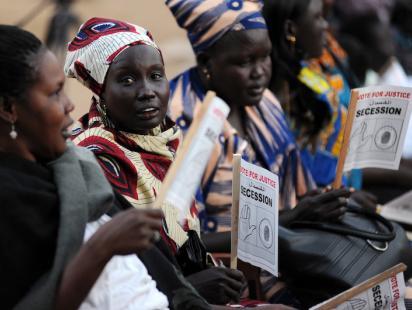
Uniting Economic Prosperity and Ethnic Inclusion in Africa

With more than 2,000 different ethnic groups in Africa, the cultural diversity of the continent is often faced with political fragmentation and development challenges. Does ethnic inclusion always guarantee economic growth? By studying 41 African states, economists Pierre Pecher and Frédéric Gaspart have demonstrated that ethnic inclusion has a positive effect on the GDP when stable, democratic institutions are in place.
AUGUST 4, 2020
AUGUST 4, 2020

The Schoolbag Revolution: Educating for Democracy

Are the foundations of democracy always laid in the midst of civil disobedience? Most democratic transitions in the last century have not, in fact, been the result of a peoples’ revolt. When it is in their own interests, authoritarian elites have been known to cede power without witnessing an insurrection. The economists Raouf Boucekkine, Paolo G. Piacquadio and Fabien Prieur interrogate the conditions necessary for peaceful transfer of power, by highlighting how education can lay fertile ground for the seeds of democracy.
JULY 21, 2020
JULY 21, 2020

What is the impact of public research decision on innovation in France?

Researcher Raouf Boucekkine (AMU/AMSE) is coordinating a study for the French Ministry of Higher Education, Research and Innovation (article in French only)
JULY 15, 2020
JULY 15, 2020

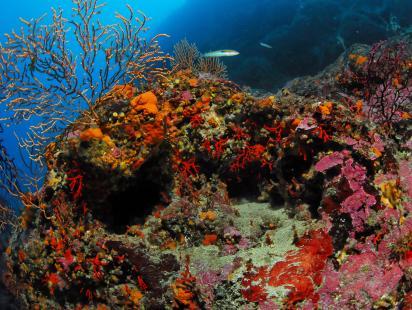
The Value of Coralligenous Habitats

What do we know about nature? Not a whole lot. According to estimates from the French National Museum of Natural History, we have identified between 1% and 10% of the species on Earth. Marine ecosystems have been greatly damaged from being exploited for our wants and needs, though we still know very little about them and the role they play. Whether it is for biology or economics, we should be diving deep into how these habitats are important on both a large and small scale. This is what Laure Thierry de Ville d’Avray, Dominique Ami, Anne Chenuil, Romain David, and Jean-Pierre Féral have demonstrated by studying a little-known Mediterranean habitat known as ‘coralligene.’
JULY 7, 2020
JULY 7, 2020

Policy Brief : "Vulnerables" to Covid-19

Aix-Marseille School of Economics contributed to the report published by the OFCE and Collège des Economistes de la Santé. Article only in French
JUNE 29, 2020
JUNE 29, 2020

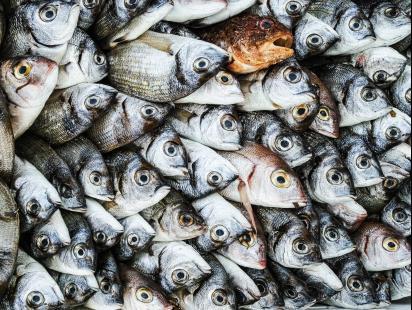
Overfishing: How Can It Be Regulated?

In order to maintain marine biodiversity, it is better to take the plunge and adopt fishing regulations than do nothing at all. However, the biological relationship between species must be considered to prevent things from going down the drain. Economists Nicolas Quérou and Agnes Tomini demonstrate this argument by studying the effects of fishing regulations in suboptimal situations.
JUNE 23, 2020
JUNE 23, 2020

Covid in Developing Economies

In the new CEPR eBook, Berman and co-authors analyse the potential impacts of the spread of COVID-19 and the restriction policies on conflict incidence worldwide.
JUNE 22, 2020
JUNE 22, 2020