At the crossroads of science and society, the Public Outreach unit of the Aix-Marseille School of Economics is committed to sharing economic science with non-specialist audiences, with the aim of shedding light on societal issues and contributing to collective thinking.

Job creation and cash holdings in private firms: is there a link?

Contrary to popular belief, holding large amounts of cash does not encourage private companies to hire staff. In fact, the effect is quite the opposite. Economists Philippe Bacchetta, Kenza Benhima and Céline Poilly highlight the role of external ‘liquidity shocks’ to explain a surprising link between the two phenomena.
MARCH 3, 2020
MARCH 3, 2020

The drive for expulsion gaining ground in the EU

In Europe, policies aimed at expelling irregular migrants and rejected asylum seekers are gaining momentum. For many years, Jean-Pierre Cassarino has collected more than 640 bilateral readmission agreements concluded by the EU Member States. He sheds light on an expanding expulsion system which is part and parcel of a broader international framework.
FEBRUARY 18, 2020
FEBRUARY 18, 2020

The thin line between expulsion and voluntary return

The European Union has constructed a new language around the « voluntary return » of irregular migrants and this is making a complex situation more difficult to grasp. Jean-Pierre Cassarino, a political scientist, studies return migration and warns against the abusive use of « return » in the political debate.
FEBRUARY 4, 2020
FEBRUARY 4, 2020

Petty racism in private housing

The password is “white” in the competitive private rentals market. Finding a flat can be a real challenge for African immigrants. The economists Bruno Decreuse, Pierre Philippes Combes, Benoît Schmutz, and Alain Trannoy study the insidious racism of neighbouring tenants and landlords that lies at the root of current discriminations.
JANUARY 21, 2020
JANUARY 21, 2020

Ambivalent relationship between HIV and education

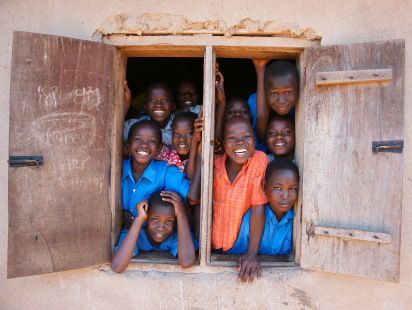
Sub-Saharan Africa has the highest HIV rate in the world, but there is a lack of public healthcare systems and huge inequalities regarding healthcare. Besides direct impacts on health, the HIV epidemic has side effects on children’s education, affecting parental behaviour around the risk of getting ill, find the economists Renaud Bourlès, Bruno Ventelou, and Maame Esi Wood.
JANUARY 5, 2020
JANUARY 5, 2020

Globalization and colonization : a tale of size

There’s a message in people’s changes in height size. During the first globalization period, at the end of the 19th century, Filipinos lost up to 1.5 centimetres compared to their grandparents. This may be evidence of the degradation of living standards and nutrition. Economic growth does not pay off for everyone in the same way, as those who lived in colonized areas know.
DECEMBER 17, 2019
DECEMBER 17, 2019

The people of Mali get to grips with the problem of sanitation

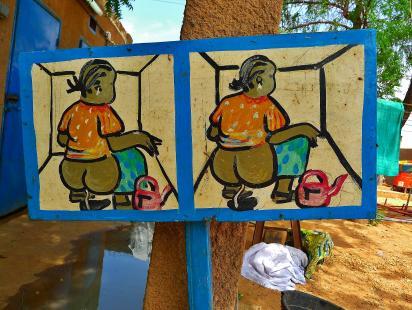
Today, 2 billion people still lack basic sanitation access. Although that constitutes a health emergency, the proposed solutions are not always appropriate. Authors Alzua and Djebbari show that involving the community in a sanitation program in the Koulikouro region of Mali leads to shifts in collective practices as families build and start using latrines.  
DECEMBER 3, 2019
DECEMBER 3, 2019

Might taxes impact innovations?

States seek inventors able to revolutionise our future, contributing to progress and new ideas. What fosters and encourages invention? A wide-ranging study presented by Stefanie Stantcheva shows that taxes in the U.S. have a great influence on innovation.
NOVEMBER 19, 2019
NOVEMBER 19, 2019

Longevity, (in)equalities, progressivity: a fresh look at the U.S. tax system

Figures, percentages and graphics illustrate inequalities throughout the world.  But from one place to another, inequalities depict very different situations. How can we study them? The economist Alan Auerbach, professor at the University of California, offers a new approach to the inequalities in developed countries by studying lifetime spending, after taxation and redistribution
NOVEMBER 5, 2019
NOVEMBER 5, 2019

Are social transfers another vehicle for women’s empowerment?

Conditional Cash Transfers grant money to poor households with children provided that their members meet certain conditions. A common feature of many CCT programs in Latin America is that payments are targeted to the mother. Could this policy be a way for women to gain autonomy? Marcelo Bergolo and Estefanía Galván find that a CCT program in Uruguay results in women gaining greater responsibility for decisions in specific spheres of household expenditure. On the negative side, however, it has discouraging effects on their formal employment.
OCTOBER 22, 2019
OCTOBER 22, 2019