At the crossroads of science and society, the Public Outreach unit of the Aix-Marseille School of Economics is committed to sharing economic science with non-specialist audiences, with the aim of shedding light on societal issues and contributing to collective thinking.

Blowing the whistle: from dissent to accountability in a democracy

The growing support for whistle-blowers’ right to protection illustrates the challenges facing democracy in its attempt to ensure transparency and accountability. With technology allowing new forms of governance, the scope for secrecy and obfuscation of state power has increased. In the attempt to balance the democratic need for transparency against existential threats to security, whistle-blowing is becoming the new standard for accountability.
OCTOBER 8, 2019
OCTOBER 8, 2019

Can the market be ethical?

Combining markets and ethics isn’t easy, and the numerous frauds and scams that intervene at regular intervals don’t help. Should we be looking for more competition to reach efficiency or, on the contrary, seeking market regulation? To respond to this dilemma, economist Marie Claire Villeval uses experimental tools.
SEPTEMBER 10, 2019
SEPTEMBER 10, 2019

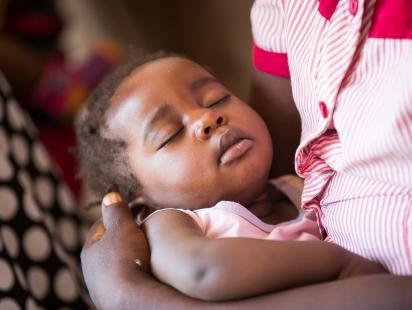
In Zambia, traditional beliefs increase maternal risk

In this little country located in Southern Africa, birth complications are not treated and access to contraception remains difficult. Besides having poor access to medical services, traditional beliefs make pregnant women hide their problems, a silence that increases the already high maternal mortality rate.
SEPTEMBER 24, 2019
SEPTEMBER 24, 2019

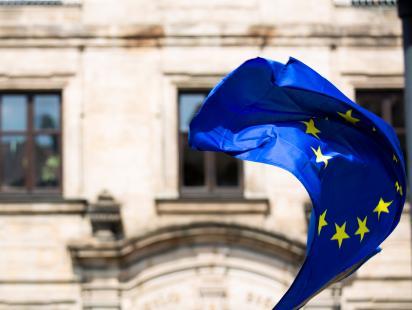
Blowing the whistle : a new European agreement

In April 2019, at the insistence of the civil society, the European Parliament enacted a new agreement for better protection of whistle-blowers. This is potentially good news not only for human rights but also in the fight against corruption. This proposal is bound to take the EU a step closer in its fight against corruption and push the member states to move in a similar direction.
AUGUST 13, 2019
AUGUST 13, 2019

Sovereign wealth funds: just a fashion?

The Qatari Sovereign Wealth Fund owns the PSG football team, more than 6 hotels and shares in Lagardère or Total, to name but a few of their assets. That’s enough to attract some concern. However, it’s simply following a world trend since the beginning of the 21st century. More than 45% of existing wealth funds were created between 2000 and 2009. Economists C. Lecourt, J. Amar, and V. Kinon explain what’s behind this “craze”.
AUGUST 27, 2019
AUGUST 27, 2019

Entrepreneurial motivations impact business performance

Microcredits help microenterprises get started. They are an innovative way to address financial exclusion and unemployment. But business performance is closely linked to entrepreneurial motivation. Renaud Bourlès and Anastasia Cozarenco show that businesses started by « necessity » are less likely to make profits than those that are the result of « opportunity ». So differentiating between entrepreneurial motivations is a challenge for public policies.
JULY 18, 2019
JULY 18, 2019

Whistle-blowing is not just necessary, it’s also measurable

Whistle-blowing has been the subject of far-reaching discussions regarding its justification and its legal support. Although there is a range of laws protecting those who blow the whistle, especially in the G20 countries, whistle-blowers are still at risk. Enhancing their protection seems to be a challenge. Examining the issue, political philosophers Manohar Kumar and Daniele Santoro call for better protection backed up by a set of assessments. They reopen the debate through a three-part series of articles.
JULY 14, 2019
JULY 14, 2019

PORTFOLIO - Between permanency and change: Cambodia and its culture

Econdialog interviewed Ben Kiernan, professor of History at Yale University, about Cambodian history. He explains how its natural resources are a key to understanding the glory of the Angkor Empire. Cambodia was a land of plenty.
JULY 2, 2019
JULY 2, 2019

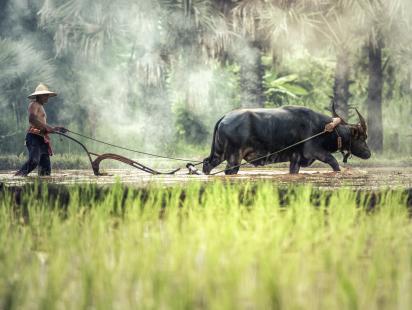
Of rice and folly in Cambodia: from Angkor to Democratic Kampuchea

From the Angkor Empire to Democratic Kampuchea, Cambodia has been in turn a land of plenty and of poverty, a prosperous and then battered country. Connecting these two stories, historian Ben Kiernan draws a line: Cambodia has always been a master in the art of rice-growing. Since the glacial era, climatic conditions have shaped a fertile land, home to both the Khmer civilisation and modern Democratic Kampuchea.
JULY 2, 2019
JULY 2, 2019

Addressing inequalities through the social ladder

Going beyond the battle against income inequalities, some look to equal opportunities as a way of offering everyone the same chances and enabling deprived people to escape the poverty trap. Social mobility gives everyone the chance to move upwards. Economists Cowell and Flachaire present a mobility index to add to the existing inequality measures.
JUNE 18, 2019
JUNE 18, 2019