An online media outlet dedicated to making economics accessible, bridging the gap between academic knowledge and the general public. Dialogues économiques publishes articles, video interviews, and infographics, twice a month, providing information on a wide range of topics addressed by economic research. Available in both French and English, the content may be reproduced in its entirety, provided the authors and the source Dialogues économiques are credited (CC BY-NC-ND). Readers can subscribe to receive each new publication directly in their inbox.


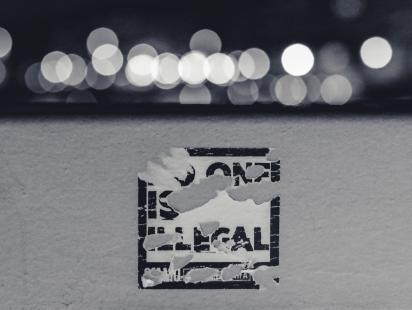
The boycott of Israel: the poor man's weapon, or a weapon of massive exclusion?

Between 1962 and 2012, 36 States banned trade with Israel. No products, no services, no exchange… radio silence! Well, not exactly. Economists Lorenzo Rotunno and Pierre Louis Vézina found that during this period, Israel exported up to $6.4 billion-worth to those countries. From official to informal flows, the commercial boycott of Israel is clearly less than complete. The authors take a look at the mechanisms behind these secret exchanges and check what remains of the boycott’s intentions.
FEBRUARY 26, 2019
FEBRUARY 26, 2019

Once upon a time in the Wild West : The Good, the Bad and the State

Talking about the Gold Rush and the Wild West immediately conjures up fortune seekers and anarchy, but certainly not economic analysis. Yet economists have demonstrated how the presence of state institutions significantly reduced criminality in these areas, both back then and ever since, using data on mining in the Great American West. But what about the violence prevalent in states (or regions) before state institutions were established to ensure some form of property rights regulation?
JANUARY 14, 2019
JANUARY 14, 2019

Influence network between ministers and municipalities

Appointing a minister increases by 45% the investment grants allocated to the municipality in which he or she has held a local mandate. This gift – valued at 30 million euros per year !- illustrates the importance of the relationships ministers build over the course of their political careers. Brice Fabre and Marc Sangnier shed light on the reasons for such generosity.
JANUARY 29, 2019
JANUARY 29, 2019

Protests and trust in the state: Evidence from African countries

Protesting is one type of social movement that can be used as a democratic way of expressing grievances. However, a demonstration also draws other citizens’ attention to government policy. Thus, protests can make people distrustful of the head of state and the monitoring institutions that are supposed to exercise control. Marc Sangnier and Yanos Zylberberg take us to Africa, where they study the influence demonstrators can have on the population as a whole.
JANUARY 16, 2019
JANUARY 16, 2019

Whistle-blowing is not just necessary, it’s also measurable

Whistle-blowing has been the subject of far-reaching discussions regarding its justification and its legal support. Although there is a range of laws protecting those who blow the whistle, especially in the G20 countries, whistle-blowers are still at risk. Enhancing their protection seems to be a challenge. Examining the issue, political philosophers Manohar Kumar and Daniele Santoro call for better protection backed up by a set of assessments. They reopen the debate through a three-part series of articles.
JULY 14, 2019
JULY 14, 2019

Ambivalent relationship between HIV and education

Sub-Saharan Africa has the highest HIV rate in the world, but there is a lack of public healthcare systems and huge inequalities regarding healthcare. Besides direct impacts on health, the HIV epidemic has side effects on children’s education, affecting parental behaviour around the risk of getting ill, find the economists Renaud Bourlès, Bruno Ventelou, and Maame Esi Wood.
JANUARY 5, 2020
JANUARY 5, 2020

Of rice and folly in Cambodia: from Angkor to Democratic Kampuchea

From the Angkor Empire to Democratic Kampuchea, Cambodia has been in turn a land of plenty and of poverty, a prosperous and then battered country. Connecting these two stories, historian Ben Kiernan draws a line: Cambodia has always been a master in the art of rice-growing. Since the glacial era, climatic conditions have shaped a fertile land, home to both the Khmer civilisation and modern Democratic Kampuchea.
JULY 2, 2019
JULY 2, 2019

The State’s role in optimal schooling, as related to age-structure and longevity

A study conducted by Bonneuil and Boucekkine underlines how the State can influence education in line with demographic transition. As life expectancy increases, the State can increase school life expectancy to maximize citizens’ well-being.
JANUARY 15, 2019
JANUARY 15, 2019

Blowing the whistle : a new European agreement

In April 2019, at the insistence of the civil society, the European Parliament enacted a new agreement for better protection of whistle-blowers. This is potentially good news not only for human rights but also in the fight against corruption. This proposal is bound to take the EU a step closer in its fight against corruption and push the member states to move in a similar direction.
AUGUST 13, 2019
AUGUST 13, 2019

Blowing the whistle: from dissent to accountability in a democracy

The growing support for whistle-blowers’ right to protection illustrates the challenges facing democracy in its attempt to ensure transparency and accountability. With technology allowing new forms of governance, the scope for secrecy and obfuscation of state power has increased. In the attempt to balance the democratic need for transparency against existential threats to security, whistle-blowing is becoming the new standard for accountability.
OCTOBER 8, 2019
OCTOBER 8, 2019