An online media outlet dedicated to making economics accessible, bridging the gap between academic knowledge and the general public. Dialogues économiques publishes articles, video interviews, and infographics, twice a month, providing information on a wide range of topics addressed by economic research. Available in both French and English, the content may be reproduced in its entirety, provided the authors and the source Dialogues économiques are credited (CC BY-NC-ND). Readers can subscribe to receive each new publication directly in their inbox.


Making doubt profitable

In May 2021, a French youtuber revealed on social networks that he had been approached by a communication agency to discredit the Pfizer-BioNTech vaccine. Following his statement, other European influencers report receiving an identical proposal. The deal was that they would put forward a pre-written false argument in exchange for a fee. The aim? Likely to promote another vaccine over the German one. This attempt to cast doubt is reminiscent of how industrialists attempt to manipulate public opinion. Economists Yann Bramoullé and Caroline Orset modelled the cost of firms’ manipulation of scientific facts.
JUNE 29, 2021
JUNE 29, 2021

Talent, Taxes & Equal Opportunity

What is talent? According to the economist Alain Trannoy, it is the sum of an initial skill and the efforts made to maintain it. This definition is part of a larger philosophical sphere focused on equal opportunity, which applies to a redistributive tax model that aims to reduce income inequality.
JUNE 15, 2021
JUNE 15, 2021

How Much Is a Cleaner Air Worth?

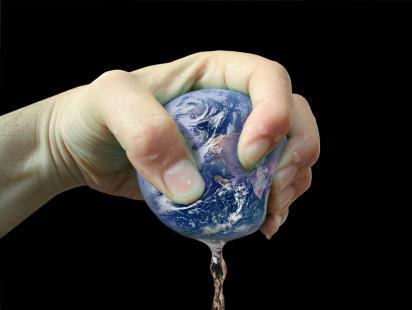
It can provoke cardiovascular and respiratory diseases, contribute to climate change, impair the growth of crops, and damage buildings... Needless to say, air pollution causes a myriad of harmful effects. But how do you calculate the benefits associated with cleaner air when they do not come with a price tag? One way to do it is to estimate the amount we would be willing to pay to avoid associated deaths. And this is exactly what the economist Olivier Chanel did. Using research from Santé publique France, he expresses in euros the deaths that could be prevented by reducing air pollution.
MAY 11, 2021
MAY 11, 2021

When growth takes on debt

With the Covid-19 crisis, the level of French national debt has shot up, but can we be sure that such high levels of debt will impede growth? This is a tricky question to answer, because there are many factors at work, such as variations in GDP (the primary consequence of excessive debt), or the quality of the information received by economic players. A study by economists Arnaud Chéron, Kazuo Nishimura, Carine Nourry, Thomas Seegmuller and Alain Venditti examines the complex issue of the relationship between debt and GDP.
APRIL 27, 2021
APRIL 27, 2021

When people in Vaucluse have more children than those in Bouches-du-Rhône

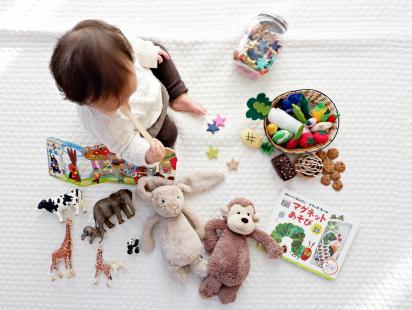
Departments in France with the same socio-economic and historical conditions nevertheless present different fertility rates. Paolo Melindi-Ghidi and Thomas Seegmuller explain these surprising results by introducing a new hypothesis called “love for children”.
APRIL 13, 2021
APRIL 13, 2021

Motivating Virtuous Acts through Choice

Want to encourage prosocial behavior? Paying people directly is less effective than giving them the choice between direct compensation and donation to a “good cause.” Economists Antoine Beretti, Charles Figuières, and Gilles Grolleau demonstrate this by proposing a way to motivate as many people as possible to behave virtuously.
MARCH 30, 2021
MARCH 30, 2021

Single Property Tax: One tax “to rule them all”

What kinds of taxes on real estate exist in France? There are five main ones—not counting the country’s housing tax, which should disappear by 2023. Between annual taxes and lump-sum taxes, it is hard to keep track of exactly how much we pay over the course of our lives. To alleviate this problem, economists Guillaume Bérard and Alain Trannoy propose a radical tax reform to replace these various taxes with a single property tax.
MARCH 16, 2021
MARCH 16, 2021

How the Mental Load for Women is Twofold

Let’s say that a woman spends more time at work than her partner. Where’s the problem in that? In any case, it’s a rare occurrence—and for good reason. According to a study by Sarah Flèche, Anthony Lepinteur, and Nattavudh Powdthavee, the unequal distribution of domestic tasks often takes a toll on a woman's professional life. This study demonstrates how this mental load (which the majority of women still bear today) prevents them from being able to equally juggle their professional and family life and also harms their well-being.
MARCH 3, 2021
MARCH 3, 2021

Towards universal health coverage in developing countries

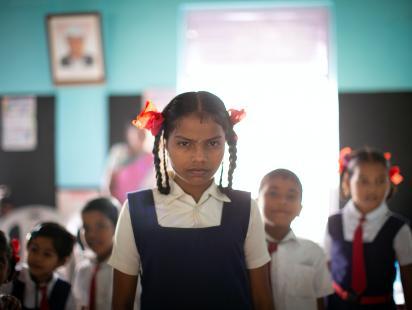
The aim of universal health coverage is the provision of healthcare for all. Universal health coverage – in its essence, a deeply humanitarian initiative - is difficult to implement, because of its high cost to the public finance. At present in Palestine, more than half of the population is already covered, but what would it cost to extend coverage to every one of the country's inhabitants? How should such a policy be financed? Economists Mohammad Abu-Zaineh, Sameera Awawda and Bruno Ventelou have conducted a study of the issue.
FEBRUARY 16, 2021
FEBRUARY 16, 2021

Rising Property Prices – Reason for Businesses to Celebrate?

When real estate prices rise, it influences business investment. For large-scale property owners, this is something to celebrate, and investment increases. For those whose activities are smaller in scale, the outlook dims as investments decline. In their studies, Denis Fougère, Rémy Lecat, and Simon Ray are focusing on financial frictions with relation to property investments.
FEBRUARY 2, 2021
FEBRUARY 2, 2021