At the crossroads of science and society, the Public Outreach unit of the Aix-Marseille School of Economics is committed to sharing economic science with non-specialist audiences, with the aim of shedding light on societal issues and contributing to collective thinking.

Canada's Mission: reducing greenhouse gas emissions

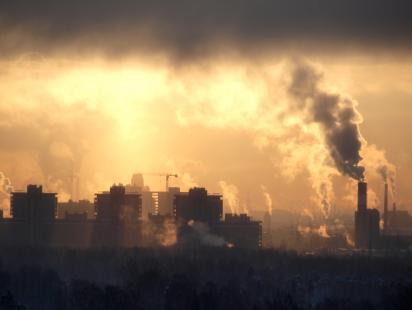
Greenhouse gas emissions have been a major topic of conversation both nationally and internationally for the past 20 years. Why is it so difficult to find common ground on the subject? One of the reasons is that reducing greenhouse gases by any level could lead to significant damage on both employment and society. Economists Julien Hanoteau and David Talbot demonstrate this by studying Quebec’s carbon market.
AUGUST 18, 2020
AUGUST 18, 2020

Uniting Economic Prosperity and Ethnic Inclusion in Africa

With more than 2,000 different ethnic groups in Africa, the cultural diversity of the continent is often faced with political fragmentation and development challenges. Does ethnic inclusion always guarantee economic growth? By studying 41 African states, economists Pierre Pecher and Frédéric Gaspart have demonstrated that ethnic inclusion has a positive effect on the GDP when stable, democratic institutions are in place.
AUGUST 4, 2020
AUGUST 4, 2020

The Schoolbag Revolution: Educating for Democracy

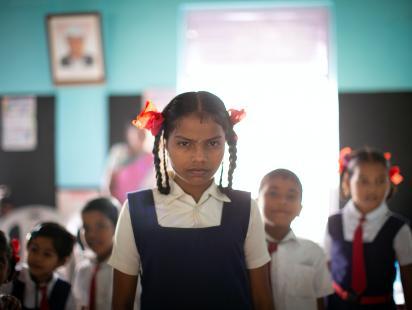
Are the foundations of democracy always laid in the midst of civil disobedience? Most democratic transitions in the last century have not, in fact, been the result of a peoples’ revolt. When it is in their own interests, authoritarian elites have been known to cede power without witnessing an insurrection. The economists Raouf Boucekkine, Paolo G. Piacquadio and Fabien Prieur interrogate the conditions necessary for peaceful transfer of power, by highlighting how education can lay fertile ground for the seeds of democracy.
JULY 21, 2020
JULY 21, 2020

What is the impact of public research decision on innovation in France?

Researcher Raouf Boucekkine (AMU/AMSE) is coordinating a study for the French Ministry of Higher Education, Research and Innovation (article in French only)
JULY 15, 2020
JULY 15, 2020

The Value of Coralligenous Habitats

What do we know about nature? Not a whole lot. According to estimates from the French National Museum of Natural History, we have identified between 1% and 10% of the species on Earth. Marine ecosystems have been greatly damaged from being exploited for our wants and needs, though we still know very little about them and the role they play. Whether it is for biology or economics, we should be diving deep into how these habitats are important on both a large and small scale. This is what Laure Thierry de Ville d’Avray, Dominique Ami, Anne Chenuil, Romain David, and Jean-Pierre Féral have demonstrated by studying a little-known Mediterranean habitat known as ‘coralligene.’
JULY 7, 2020
JULY 7, 2020

Policy Brief : "Vulnerables" to Covid-19

Aix-Marseille School of Economics contributed to the report published by the OFCE and Collège des Economistes de la Santé. Article only in French
JUNE 29, 2020
JUNE 29, 2020

Overfishing: How Can It Be Regulated?

In order to maintain marine biodiversity, it is better to take the plunge and adopt fishing regulations than do nothing at all. However, the biological relationship between species must be considered to prevent things from going down the drain. Economists Nicolas Quérou and Agnes Tomini demonstrate this argument by studying the effects of fishing regulations in suboptimal situations.
JUNE 23, 2020
JUNE 23, 2020

Covid in Developing Economies

In the new CEPR eBook, Berman and co-authors analyse the potential impacts of the spread of COVID-19 and the restriction policies on conflict incidence worldwide.
JUNE 22, 2020
JUNE 22, 2020

Can the Central Bank still play the hero in the face of current and future debt?

How will we face the economic crisis that is awaiting us? History can give some insight. Since the financial crisis of 2008, industrialised states have been required to rely on the 'superpowers' of the Central Banks to buy back part of their debt, thereby avoiding the phenomenon of debt strangulation. Such practices have raised fears of a return to inflation, and of a threat to the independence of the monetary authorities. However, in the current context such practices can be beneficial, according to economists Gilles Dufrénot, Fredj Jawadi and Guillaume A. Khayat.
JUNE 9, 2020
JUNE 9, 2020

How did the general practitioners operate during the confinement linked to Covid-19?

Bruno Ventelou (CNRS/AMSE) health economist, co-author of a report for the French Directorate for Research, Studies, Assessment, and Statistics (only in French).
JUNE 4, 2020
JUNE 4, 2020

What strategy should be employed to deal with COVID?

Are the containment measures effective? Should the population have been tested? Burning questions like this are igniting current public debate. Researchers Raouf Boucekkine (AMSE), Josselin Thuilliez (CNRS / PSE) and Jérôme Adda (Bocconi, Milan) have developed the “ECOVID-19” project, to respond to and assess the effectiveness of French public policy in the face of the current crisis.
MAY 26, 2020
MAY 26, 2020

Immigrants and Citizens: Equal in Health?

Even if immigrants arriving in Europe are in better health than native-born citizens, residing in their host country affects them much more negatively. According to Marwân-al-Qays Bousmah, Simon Combes, and Mohammad Abu-Zaineh, immigrants’ health deteriorates with the length of residence in the host country. Does discrimination go beyond the realm of social status to even impact health?
MAY 12, 2020
MAY 12, 2020

Decisions in Periods of Uncertainty, Fear, and Catastrophe

One of the things which led to Covid-19 becoming a catastrophic situation has revealed to be the choices that were made before the pandemic. Regardless of whether these choices were good or not, they were nevertheless made. This therefore leads to the question of how catastrophes influence decision-making in uncertain situations. Theories are able to clearly explain our choices when we have all the elements in hand. However, once exceptional situations occur, such as catastrophes that have disastrous yet very unlikely consequences, these theories reveal to be less pertinent.
APRIL 28, 2020
APRIL 28, 2020

Migration, an issue beyond borders

Hidden behind the migrant are the shortcomings of a coercive state system that has little respect for Human Rights and individual dignity. Readmission has implications going far beyond the migration realm. Jean-Pierre Cassarino draws a parallel between the increasing regulation of migration policies and the gradual deregulation of the labor market.
APRIL 14, 2020
APRIL 14, 2020

The project Economic Epidemiology of Covid-19 (ECOVID-19) supported by the French National Research Agency

A team of researchers propose a comparative cost-effectiveness analysis of public policies during the Covid-19 epidemic in France.
APRIL 10, 2020
APRIL 10, 2020

The glass ceiling in Academia: when women hurt their career success

Why are there so few women at the top of the academic career ladder? Recent research by Clément Bosquet, Pierre-Philippe Combes, and Cecilia García-Peñalosa using data for academic economists in France shows that only 18% of those in the most senior positions are women, and that this is largely due to them not applying for such positions. This is not just a matter of discrimination: women hurt their own careers by not putting themselves forward for promotion.
MARCH 31, 2020
MARCH 31, 2020

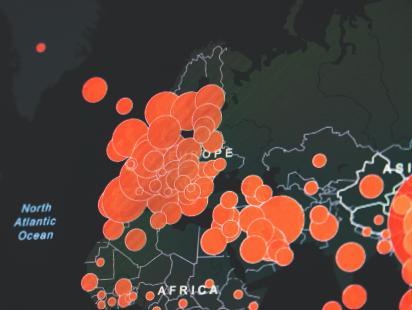
Detecting Acceleration of the COVID-19 Pandemic for Policy Guidance

A suitable approach to global pandemics like the COVID-19 is to measure and monitor acceleration/deceleration of confirmed cases and deaths over health policy responses, across countries.
MARCH 19, 2020
MARCH 19, 2020

How Can the Spark Between Ecology and Economics be Rekindled?

In a world where climate change is a hot topic, enterprising countries must take initiative in implementing ambitious environmental policies. However, the cost of these policies hinders those that have been straddled with massive public debt since the 2008 financial crisis. So, how can economics and ecology be united? This is the question that is being examined by economists Mouez Fodha, Thomas Seegmuller, and Hiroaki Yamagami.
MARCH 17, 2020
MARCH 17, 2020

Job creation and cash holdings in private firms: is there a link?

Contrary to popular belief, holding large amounts of cash does not encourage private companies to hire staff. In fact, the effect is quite the opposite. Economists Philippe Bacchetta, Kenza Benhima and Céline Poilly highlight the role of external ‘liquidity shocks’ to explain a surprising link between the two phenomena.
MARCH 3, 2020
MARCH 3, 2020

The drive for expulsion gaining ground in the EU

In Europe, policies aimed at expelling irregular migrants and rejected asylum seekers are gaining momentum. For many years, Jean-Pierre Cassarino has collected more than 640 bilateral readmission agreements concluded by the EU Member States. He sheds light on an expanding expulsion system which is part and parcel of a broader international framework.
FEBRUARY 18, 2020
FEBRUARY 18, 2020