At the crossroads of science and society, the Public Outreach unit of the Aix-Marseille School of Economics is committed to sharing economic science with non-specialist audiences, with the aim of shedding light on societal issues and contributing to collective thinking.

Children's skills: the crucial role of interaction with parents

Although little studied in economics, the parent-child relationship is a crucial subject, intimately linked to fundamental socio-economic issues such as inequality, growth and education. Researcher Avner Seror looks at the nature of this interaction and the impact of screens within it.
DECEMBER 7, 2023
DECEMBER 7, 2023

Microcredit in India, a response to the climate challenge?

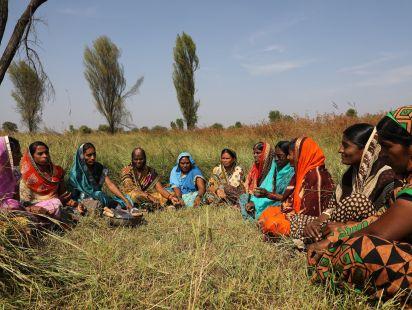
In India, microcredit helps to cushion climatic shocks, finds economist Timothée Demont in his research on community-based economic Self-Help Groups in the eastern state of Jharkhand. His analysis focuses on the effects of these groups on the economic resilience of villages when droughts affect harvests.
NOVEMBER 14, 2023
NOVEMBER 14, 2023

Remittances: a boost to growth?

The amount of money sent by emigrants to their countries of origin often exceeds that of international development aid programs. But what impact do these huge remittances have on the economies of countries? The observations are often contradictory. To understand them, economists Nicolas Destrée, Karine Gente, and Carine Nourry propose a model that links remittances, growth and education.
OCTOBER 24, 2023
OCTOBER 24, 2023

Back to the past: when economics meets archaeology

What can an Uzbek oasis in the ninth century teach us about the modern economy? Isolated in time and space, the oasis of Bukhara is an ideal "laboratory" for understanding the fundamental economic mechanisms behind urban organization. Economist Federico Trionfetti and archaeologist Rocco Rante bring together their disciplines, the past and the present, in their study of this unique place.
OCTOBER 10, 2023
OCTOBER 10, 2023
OCTOBER 14, 2023
OCTOBER 14, 2023
JUNE 17, 2024
JUNE 17, 2024
APRIL 15, 2024
APRIL 15, 2024
NOVEMBER 20, 2023
NOVEMBER 20, 2023
OCTOBER 16, 2023
OCTOBER 16, 2023

Dégradation de la notation souveraine du Cameroun : quelles causes et quelles conséquences ?

In French only | Gilles Dufrénot (AMSE, Sciences Po Aix), in an article published by The Conversation, looks back at the downgrading of Cameroon's credit rating and the consequences for its debt and potential investors.
SEPTEMBER 24, 2023
SEPTEMBER 24, 2023
JANUARY 30, 2024
JANUARY 30, 2024
JANUARY 23, 2024
JANUARY 23, 2024

One more effort for equality of opportunity

Does everyone have the same opportunity to succeed at school? While there is a certain consensus on the inequalities caused by social differences, a team of researchers demonstrates that the effort of each pupil is underestimated in explaining school results.
SEPTEMBER 12, 2023
SEPTEMBER 12, 2023

Heatwaves: stifling the economy

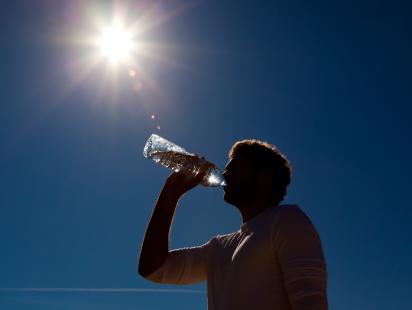
Heatwaves are often overlooked in the analysis of extreme weather events, particularly in terms of their economic impact. This lack of research and the population's low perception of risk limit the adoption of adaptation measures, despite the fact that the health effects of heatwaves are largely avoidable.
JULY 4, 2023
JULY 4, 2023

High voltage climate in Brazil: when drought kills

Are we going to end up killing each other in the face of high temperatures? Without going that far, climate change is already having a serious impact on insecurity. Brazil, infamous for its crime rate, is on the front line of environmental disasters. According to economist Phoebe W. Ishak, between 1991 and 2015, Brazil's severe droughts not only affected farmers' incomes, but also increased the homicide rate.
JUNE 19, 2023
JUNE 19, 2023

Manipulating a country's culture for greater control

How can ineffective ideas be imposed? Even when the elites who promote them are not able to impose them through their vested interests? Economists Murat Iyigun, Avner Seror and Jared Rubin propose an explanation that places the influence on the culture of the society as a central element.
JUNE 5, 2023
JUNE 5, 2023

Two-thirds of general practitioners say they have to refuse new patients as their preferred doctor

Only in French | In this study published by DREES, Bérengère Davin-Casalena and her co-authors, including Bruno Ventelou (AMU/CNRS/AMSE), take stock of general practitioners' perceptions of the supply of general medicine in their area, and of changes in practices and conditions of practice. Here, we look at how GPs are adapting their practices to cope with the decline in medical demographics, for example, by taking on new patients as GPs.

MAY 25, 2023
MAY 25, 2023