At the crossroads of science and society, the Public Outreach unit of the Aix-Marseille School of Economics is committed to sharing economic science with non-specialist audiences, with the aim of shedding light on societal issues and contributing to collective thinking.

Collective Decision: Preventing the Worst from Happening

Should we wish for the best or focus on damage control? From deciding who will sit on the U.S. Supreme Court, to choosing a cake for guests, or distributing a budget, the question is always there. Anna Bogomolnaia, Ron Holzman, and Hervé Moulin look at the mechanisms of decision-making and come up with ways to increase the guarantee that the worst will not happen.
SEPTEMBER 28, 2021
SEPTEMBER 28, 2021

Health economics - Interview with Bruno Ventelou

Bruno Ventelou (AMSE/CNRS), a health economist, talks about his research.
SEPTEMBER 16, 2021
SEPTEMBER 16, 2021

Prevention is better than ... getting old?

In 2019, public health expenditure in the European Union amounted to 983 billion euros - 7% of GDP on average. According to a study conducted by researchers Yevgeniy Goryakin, Sophie Thiébaut, Sébastien Cortaredona, Aliénor Lerouge, Michele Cecchini, Andrea Feigl, and Bruno Ventelou, health spending will continue to increase steadily, reaching an estimated figure of between 1223 and 1278 billion euros by 2050.
AUGUST 31, 2021
AUGUST 31, 2021

Why do most prices rarely change?

Fuel prices are almost constantly changing, whilst prices paid for electrical appliances may remain stable for several months. For most products, prices tend to remain the same over weeks or even months. There is a simple explanation for this: it would be too expensive for companies to perpetually analyse market price changes. This is the conclusion reached by economists Mark N. Harris, Hervé Le Bihan and Patrick Sevestre after analysing the evolution of prices of several hundred industrial product pricess.
SEPTEMBER 14, 2021
SEPTEMBER 14, 2021

L'impression 3D (et l’économie) peuvent renforcer l’efficacité de la lutte contre les pandémies

Only in French | A team of researchers, including Gilbert Cette (AMSE/AMU/Banque de France), questions, the relevance of 3D printers as a means of production in times of pandemic
AUGUST 25, 2021
AUGUST 25, 2021

Health effects from heat waves in France: an economic evaluation

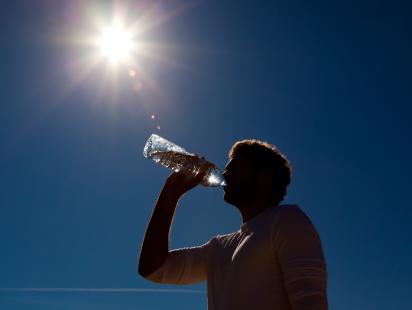
A study by Lucie Adélaïde (Santé publique France), Olivier Chanel (AMU/CNRS/AMSE), Mathilde Pascal (Santé publique France) published in the European Journal of Health Economics and Bulletin épidémiologique hebdomadaire assesses the economic impact associated with mortality, morbidity, and loss of well-being during heat waves in France
JULY 26, 2021
JULY 26, 2021

Summer with Dialogues économiques

Dialogues économiques is taking its summer break and looks forward to seeing you on September 1st ! To keep you waiting until then, the online magazine offers you a selection of articles to (re)read...
JULY 19, 2021
JULY 19, 2021

Making doubt profitable

In May 2021, a French youtuber revealed on social networks that he had been approached by a communication agency to discredit the Pfizer-BioNTech vaccine. Following his statement, other European influencers report receiving an identical proposal. The deal was that they would put forward a pre-written false argument in exchange for a fee. The aim? Likely to promote another vaccine over the German one. This attempt to cast doubt is reminiscent of how industrialists attempt to manipulate public opinion. Economists Yann Bramoullé and Caroline Orset modelled the cost of firms’ manipulation of scientific facts.
JUNE 29, 2021
JUNE 29, 2021

Qui fraude le fisc ? / Who is evading taxes?

Only in French | Nicolas Jacquemet (Université Paris 1 / École d’économie de Paris), Stéphane Luchini (CNRS/AMSE) and Antoine Malézieux (Burgundy School of Business) explain, in an article accessible to all on the website "La vie des idées", how behavioural economics sheds more light on the determinants of tax evasion.
JUNE 21, 2021
JUNE 21, 2021

The Economics of Deep Trade Agreements

Only in english | In this eBook, Center for Economic and Policy Research (CEPR) and World Bank bring together leading experts in international trade from academia and policy institutions to provide new analysis on the determinants of deep trade agreements. Freely available from 23 June 2021.
JUNE 23, 2021
JUNE 23, 2021

Le système de santé : enjeux et défis

Only in French | This collective work, proposed for the 30th anniversary of the Collège des Economistes de la Santé and coordinated by Thomas Barnay (Université Paris-Est Créteil), Anne-Laure Samson (Université de Lille/LEM), and Bruno Ventelou (AMU/CNRS/AMSE), analyses the main challenges facing the health system. Available online on 24 June and in bookshops on 12 July 2021.
JUNE 22, 2021
JUNE 22, 2021

Talent, Taxes & Equal Opportunity

What is talent? According to the economist Alain Trannoy, it is the sum of an initial skill and the efforts made to maintain it. This definition is part of a larger philosophical sphere focused on equal opportunity, which applies to a redistributive tax model that aims to reduce income inequality.
JUNE 15, 2021
JUNE 15, 2021

COVID-19 vaccine hesitancy in a representative working-age population in France: a survey experiment based on vaccine characteristics

Around one in three working-age adults (29%) surveyed in France in July 2020 would refuse any COVID-19 vaccine fond a team of researcher including Stéphane Luchini (CNRS, AMSE). This study was published in The Lancet Public Health the 5th February 2021.
FEBRUARY 4, 2021
FEBRUARY 4, 2021

A la reconquête du travail durable - L'économie sociale et solidaire en pionnière

Only in French | In this book, Arnaud Lacan (KEDGE Business School/AMSE) presents the social and solidarity economy as a viable and sustainable alternative to traditional work systems based on surveillance and verticality.
JUNE 7, 2021
JUNE 7, 2021

Un outil pour suivre la dynamique virale en temps réel et guider la décision publique

A team of researchers from Aix-Marseille School of Economics and the Institut de Neurosciences de la Timone is proposing an indicator that measures the dynamics of the Covid-19 pandemic and an algorithm for the spatial distribution of the tests. Their research was published in the scientific journal PLOS ONE.
JUNE 2, 2021
JUNE 2, 2021

Crises épidémiques et mondialisation, des liaisons dangereuses ?

Only in French | In this book, available in bookstores on June 2, 2021, Economists Gilles Dufrénot (AMU/AMSE) and Anne Levasseur-Franceschi (ENS Cachan) put the health crisis of Covid-19 in globalization's broader context.
JUNE 1, 2021
JUNE 1, 2021

How Much Is a Cleaner Air Worth?

It can provoke cardiovascular and respiratory diseases, contribute to climate change, impair the growth of crops, and damage buildings... Needless to say, air pollution causes a myriad of harmful effects. But how do you calculate the benefits associated with cleaner air when they do not come with a price tag? One way to do it is to estimate the amount we would be willing to pay to avoid associated deaths. And this is exactly what the economist Olivier Chanel did. Using research from Santé publique France, he expresses in euros the deaths that could be prevented by reducing air pollution.
MAY 11, 2021
MAY 11, 2021

When growth takes on debt

With the Covid-19 crisis, the level of French national debt has shot up, but can we be sure that such high levels of debt will impede growth? This is a tricky question to answer, because there are many factors at work, such as variations in GDP (the primary consequence of excessive debt), or the quality of the information received by economic players. A study by economists Arnaud Chéron, Kazuo Nishimura, Carine Nourry, Thomas Seegmuller and Alain Venditti examines the complex issue of the relationship between debt and GDP.
APRIL 27, 2021
APRIL 27, 2021

When people in Vaucluse have more children than those in Bouches-du-Rhône

Departments in France with the same socio-economic and historical conditions nevertheless present different fertility rates. Paolo Melindi-Ghidi and Thomas Seegmuller explain these surprising results by introducing a new hypothesis called “love for children”.
APRIL 13, 2021
APRIL 13, 2021

Motivating Virtuous Acts through Choice

Want to encourage prosocial behavior? Paying people directly is less effective than giving them the choice between direct compensation and donation to a “good cause.” Economists Antoine Beretti, Charles Figuières, and Gilles Grolleau demonstrate this by proposing a way to motivate as many people as possible to behave virtuously.
MARCH 30, 2021
MARCH 30, 2021