At the crossroads of science and society, the Public Outreach unit of the Aix-Marseille School of Economics is committed to sharing economic science with non-specialist audiences, with the aim of shedding light on societal issues and contributing to collective thinking.

JANUARY 23, 2024
JANUARY 23, 2024

One more effort for equality of opportunity

Does everyone have the same opportunity to succeed at school? While there is a certain consensus on the inequalities caused by social differences, a team of researchers demonstrates that the effort of each pupil is underestimated in explaining school results.
SEPTEMBER 12, 2023
SEPTEMBER 12, 2023

Heatwaves: stifling the economy

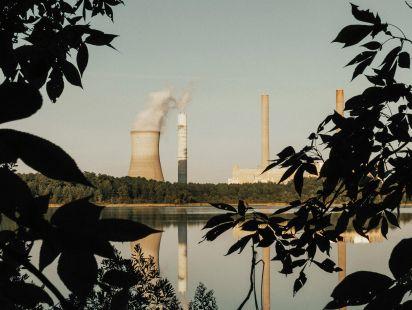
Heatwaves are often overlooked in the analysis of extreme weather events, particularly in terms of their economic impact. This lack of research and the population's low perception of risk limit the adoption of adaptation measures, despite the fact that the health effects of heatwaves are largely avoidable.
JULY 4, 2023
JULY 4, 2023

High voltage climate in Brazil: when drought kills

Are we going to end up killing each other in the face of high temperatures? Without going that far, climate change is already having a serious impact on insecurity. Brazil, infamous for its crime rate, is on the front line of environmental disasters. According to economist Phoebe W. Ishak, between 1991 and 2015, Brazil's severe droughts not only affected farmers' incomes, but also increased the homicide rate.
JUNE 19, 2023
JUNE 19, 2023

Manipulating a country's culture for greater control

How can ineffective ideas be imposed? Even when the elites who promote them are not able to impose them through their vested interests? Economists Murat Iyigun, Avner Seror and Jared Rubin propose an explanation that places the influence on the culture of the society as a central element.
JUNE 5, 2023
JUNE 5, 2023

Two-thirds of general practitioners say they have to refuse new patients as their preferred doctor

Only in French | In this study published by DREES, Bérengère Davin-Casalena and her co-authors, including Bruno Ventelou (AMU/CNRS/AMSE), take stock of general practitioners' perceptions of the supply of general medicine in their area, and of changes in practices and conditions of practice. Here, we look at how GPs are adapting their practices to cope with the decline in medical demographics, for example, by taking on new patients as GPs.
MAY 25, 2023
MAY 25, 2023

Same-sex marriage: change the law, change your mind?

Since the Netherlands in 2001, only 34 countries have legalized same-sex marriage. Have these legal norms led to more benevolence towards same-sex couples? The work of economists Sylvie Blasco, Eva Moreno Galbis and Jeremy Tanguy reveals that the evolution of individual opinions depends on the adequacy of laws with the norm of one's community or partner.
MAY 23, 2023
MAY 23, 2023

Geographical mobility : not all created equal!

What are the determinants of mobility in the labour market? Are some professions more mobile than others? Researchers Benoît Schmutz, Modibo Sidibé and Élie Vidal-Naquet reveal ways of influencing worker mobility in order to vitalise the labour market.
MAY 8, 2023
MAY 8, 2023

Can altruism reduce risk?

Bankruptcy, rising prices, epidemics... In economics, there are many risks. Is insurance really the only tool available to deal with them? According to economists Renaud Bourlès, Yann Bramoullé and Eduardo Perez-Richet, altruism also plays a key role. The ties that bind us to each other form a large network of mutual aid in the event of a major setback.
APRIL 25, 2023
APRIL 25, 2023

Judges are more lenient in Ramadan

Do fairness and fasting go together ? During Ramadan, judges of the Muslim faith pronounce 40 % more acquittals than usual. This excess of clemency has just been revealed by an analysis of 380,000 judicial cases handled by 8,500 magistrates in the Indian sub-continent by economists Sultan Mehmood, Avner Seror and Daniel L. Chen.
APRIL 11, 2023
APRIL 11, 2023

Self-employment, a status that comes at the cost of your health

Falling ill as a self-employed person or as a freelancer means facing a dilemma. Do you react as the company owner and focus on the financial continuity of your business, or do you react as an employee and take time off to recover? An international and multidisciplinary team of researchers shows that self-employed workers most often prefer the first option.
MARCH 27, 2023
MARCH 27, 2023

Rich minorities: an ideal scapegoat for autocracies

Wealthy ethnic minorities have a double advantage for autocracies: they are important for the economy and make perfect scapegoats for popular anger. This is a useful phenomenon for deflecting resentment against local authorities and delaying regime change.
MARCH 13, 2023
MARCH 13, 2023

How to Reduce Income Inequalities Among different individuals?

Between age, social status, health, and education, we are not all equal when it comes to our income! However, even as equality becomes a major focus of study, most research concentrates on income disparities within homogeneous populations. In 2021, the economists Mathieu Faure and Nicolas Gravel developed a new way to measure inequality by looking at the differences between individuals. This small revolution can play a large role in the fight against the many faces of inequality.
FEBRUARY 28, 2023
FEBRUARY 28, 2023

In Europe everything is shared, even risk

Following the Covid-19 epidemic, the European economy has once more been shaken by the arrival of war in Ukraine. How can these ‘asymmetric’ shocks, affecting member states in different ways, be managed? Economists Gilles Dufrénot, Jean-Baptiste Gossé et Caroline Clerc argue the case for financial integration. Financial markets can reduce the adverse effects of financial crises by sharing the risk across European economies.
FEBRUARY 14, 2023
FEBRUARY 14, 2023

Pension policy, a lever for ecology?

While the reform of pensions and the reform of the ecological transition are being approached by the French government as two distinct issues, they could be more linked than it might seem. Economists Armel Ngami and Thomas Seegmuller look at the effect of a pay-as-you-go pension system, taking into account the evolution of capital and pollution, as well as the effectiveness of health and environmental policies.
JANUARY 31, 2023
JANUARY 31, 2023

Grandes écoles : 80 fois plus de chances d’admission quand on est enfant d’ancien diplômé

Only in French | In The Conversation, Stéphane Benveniste (INED / AMSE) talks about the chances of admission to French Grandes Ecoles... much higher for the children of former graduates.
JANUARY 24, 2023
JANUARY 24, 2023

Are Artesian Aquifers an Endless Source of Water?

What do the Sahara Desert and Paris’ 16th arrondissement have in common? Both are located above a somewhat unusual water table: when you dig a hole in it, the water gushes out all on its own! The economists Hubert Stahn and Agnes Tomini examine this astonishing geological phenomenon in which the number of open wells does not impact the quantity of water in the water table, but rather the pressure that compresses its volume.
JANUARY 3, 2023
JANUARY 3, 2023

Knowledge: Another Way to Protect Nature

To what point does visiting a natural habitat modify the importance we give it? Does the value we give a place increase if, with each visit, we have a better academic and personal understanding of it? To respond to these questions, the researchers M. Maki Sy, H. Rey-Valette, C. Figuières, M. Simier, and R. de Wit examined the Palavas lagoons complex near Montpellier, France. The result of their study is undeniable: in most cases, an individual’s familiarity with a habitat changes his preferences. Scientific understanding also changes an individual’s preferences, but in a different way. Let’s discover how!
DECEMBER 13, 2022
DECEMBER 13, 2022

Embedding the economy into society

Social norms and interactions lie at the heart of our existence as humans, impacting all aspects of our lives. This makes made them a factor to be considered in many sciences. Yet, many economic models , trivialise them or even neglect them, in contrast to how the real world works. Therefore, three economists, Marc Fleurbaey, Ravi Kanbur, and Dennis Snower, are trying to change this perspective and bring the economy into a wider social game.
NOVEMBER 29, 2022
NOVEMBER 29, 2022